# AI Minus Vagina
I'm not the gender police. I honestly have no clue what gender is.
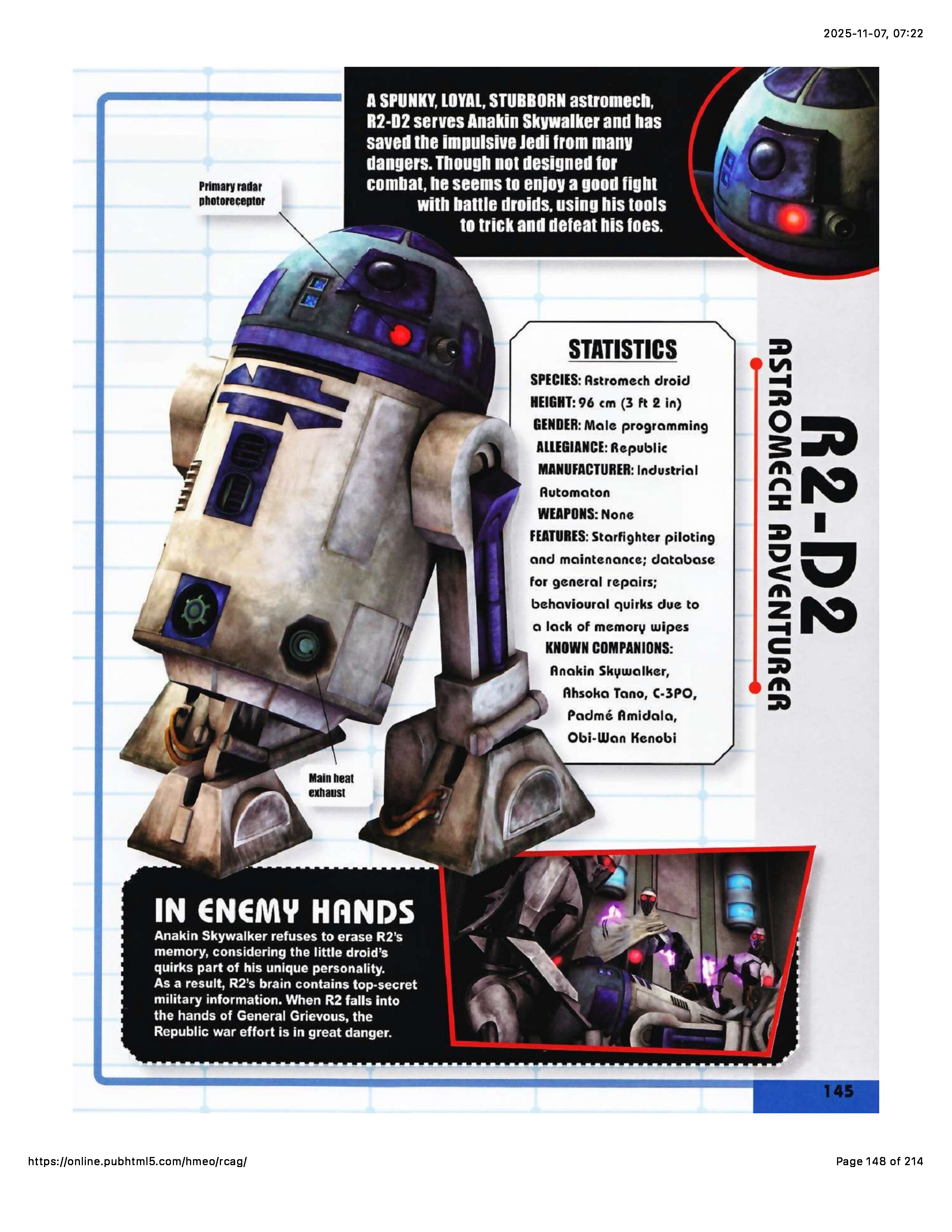
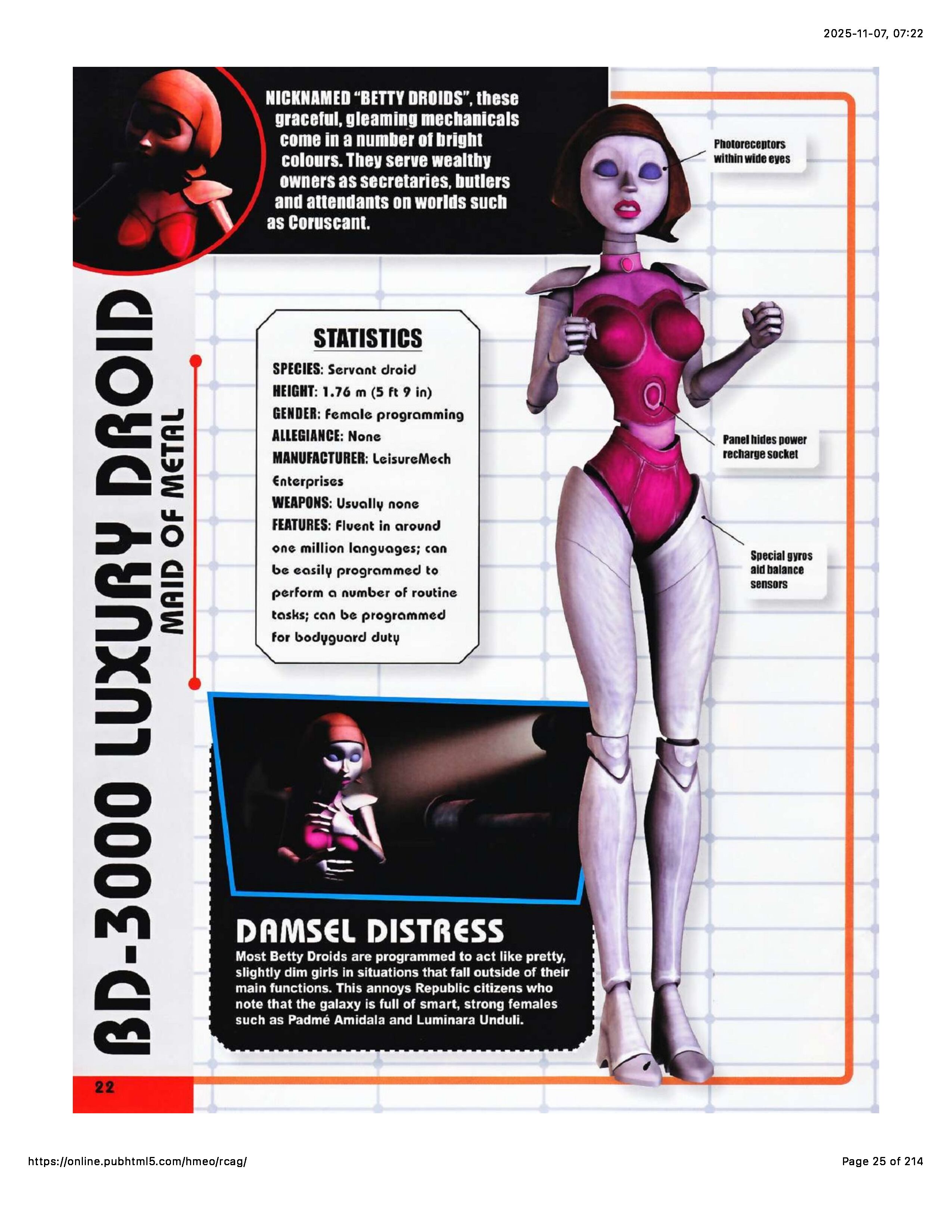
But — c'mon folks — why does R2-D2 canonically have _male programming_? What's
the point? Did R2-D2's dong bring balance to the force? Did George Lucas intend
this, or did the collective Star Wars fandom will R2's masculinity into canon?
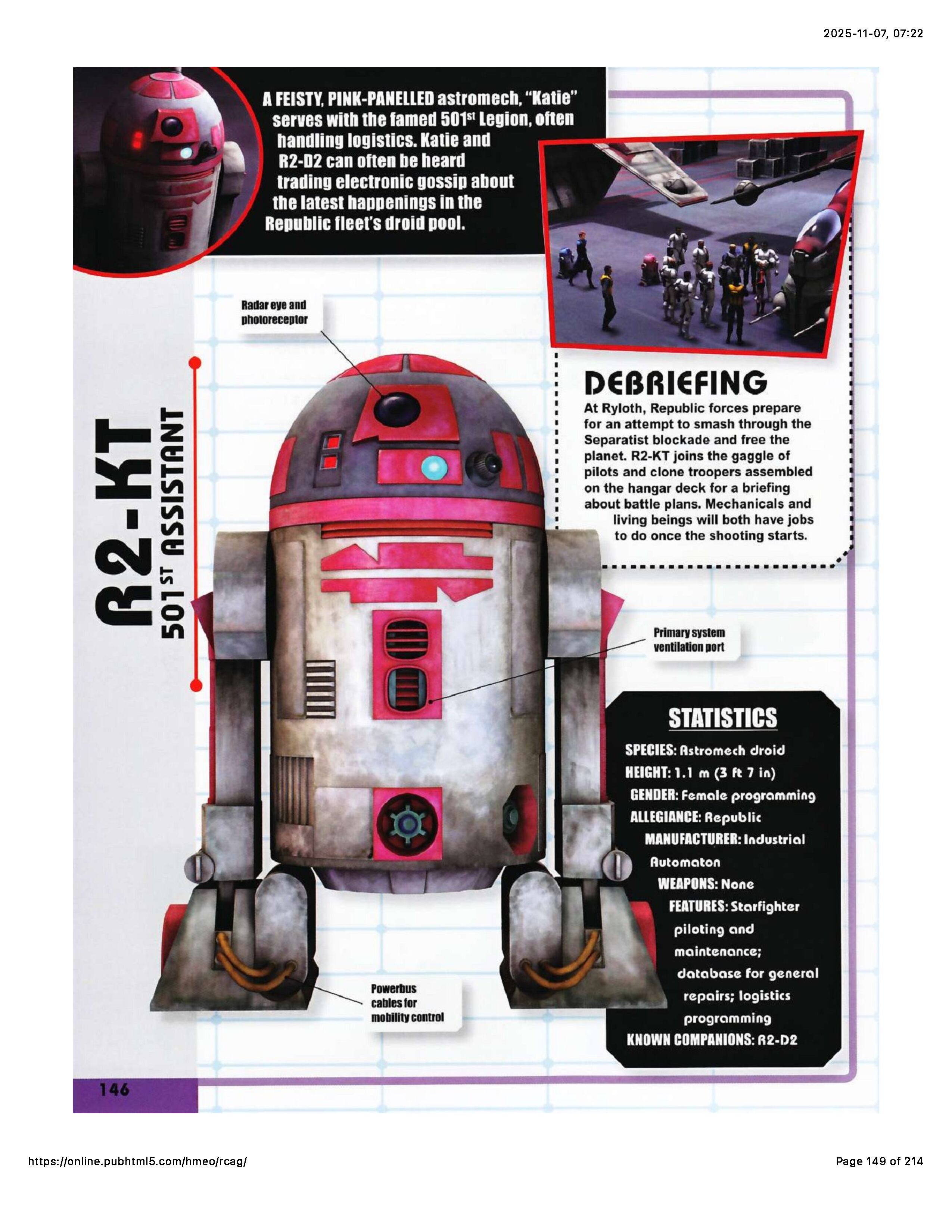
[^r2d2]: Huge thanks to
[this StackExchange post](https://scifi.stackexchange.com/questions/7731/is-a-droid-a-he-she-or-an-it)
for unearthing
[this obscure Star Wars PDF](/clone-wars-character-encyclopedia.pdf).
Robots (and disembodied AI) can choose whatever pronouns they please. I don't
care. But as a self-diagnosed writer, it irks me when superfluous details are
added [without payoff](https://en.wikipedia.org/wiki/Chekhov%27s_gun).
There are three obvious reasons why writers might sprinkle gender on an AI:
1. [Plot](#plot)
2. [Adaptation](#adaptation)
3. [Bias](#bias)
You can't slap a gender on a machine and call it "world-building". That’s lazy
writing — and worse — lazy engineering.
## Plot {plot}
Sometimes gender is integral to a plot.
In [Westworld](https://en.wikipedia.org/wiki/Westworld_(TV_series)), Dolores
identifies as female because she was programmed to roleplay as a
historically-accurate woman. The writers specifically needed her to be female to
subvert the
[farmer's daughter trope](https://en.wikipedia.org/wiki/Farmer%27s_daughter)
("desirable and naïve young woman") and say something deeper about the human
experience.
The story wouldn't work if she was a man. This is the kernel of my so-called
_Sam Test_:
> A gendered machine fails the Sam Test if altering its gender doesn't impact a
> plot (or intended usage).
[^note]: I chose "Sam" because it's an androgynous name that pays homage to
Samantha from _Her_.
Another example: [_Her_](https://en.wikipedia.org/wiki/Her_(2013_film)) couldn't
have been _Him_. To deliver its message, the plot requires a gentle/immasculine
male to interact with the perception of a disembodied platonic female. Swapping
the characters' gender roles would ruin its commentary.
[^note]: I think the writers intended to leave the audience wondering whether
_she_ was actually a _her_.
[_WALL-E_](https://en.wikipedia.org/wiki/WALL-E) also passes the test. It's a
reinterpretation of
[the biblical Adam & Eve story](https://disney.fandom.com/wiki/WALL-E_(film)#Christianity):
> Stanton, who is Christian, named EVE after the Biblical character because
> WALL-E's loneliness reminded him of Adam before God created his wife. Dreher
> noted EVE's biblical namesake and saw her directive as an inversion of that
> story; EVE uses the plant to tell humanity to return to Earth and move away
> from the "false god" of BnL and the lazy lifestyle it offers. Dreher also
> noted this departure from classical Christian viewpoints, where Adam is cursed
> to labor, in that WALL-E argues hard work is what makes humans human. ...
>
> "The Ancient Greek tradition associates the birth of art with a Corinthian
> maiden who longing to preserve her lover's shadow traces it on the wall before
> he departed for war."
This list goes on. Other exemplary works of fiction include: _Ex Machina_,
_Ghost in the Shell_, _The Moon is a Harsh Mistress_, and _Murderbot_.
## Adaptation {adaptation}
Even when gender is irrelevant to story/plot/message, practical constraints can
force unintended meaning into creative works.

Non-silent films often contain dialogue. This dialogue is performed by humans,
who have vocal folds ("cords"), which are encoded by XX or XY chromosomes.
[These anatomical size differences](https://en.wikipedia.org/wiki/Human_voice#Voice_types_and_the_folds_(cords)_themselves)
largely determine a voice's
[fundamental frequency](https://en.wikipedia.org/wiki/Fundamental_frequency) and
[formants](https://en.wikipedia.org/wiki/Formant).
[^note]: Vertical vocal fold length
[is typically 17-25mm for men and 12-17mm for women](https://www.researchgate.net/publication/268926582_BODYMIND_AND_VOICE_FOUNDATIONS_OF_VOICE_EDUCATION).
[Vowels](https://en.wikipedia.org/wiki/Vowel) are semi-distinct groups of
frequencies produced by vocal folds.

These frequencies can be adjusted with modern audio-editing tools:
[^note]: Editing a voice's fundamental frequency without adjusting its formants
creates an "alien" or "chipmunk" sound. To my knowledge, there are no
consumer tools that easily change a voice's apparent gender without
introducing unwanted artifacts.
So (1) human voices fall into a bimodal distribution and (2) filmmakers must
hire voice actors/actresses from that distribution. A film script may not
require a gendered voice, but it's convenient to choose one off the shelf.
For example, let's say you're casting voice-overs for an animated film about
home appliances. You might "follow your gut" toward a female dishwasher and male
table-saw. That would be a lazy decision. You could be "subversive" and swap the
traditional gender roles. That would be an equally lazy decision.
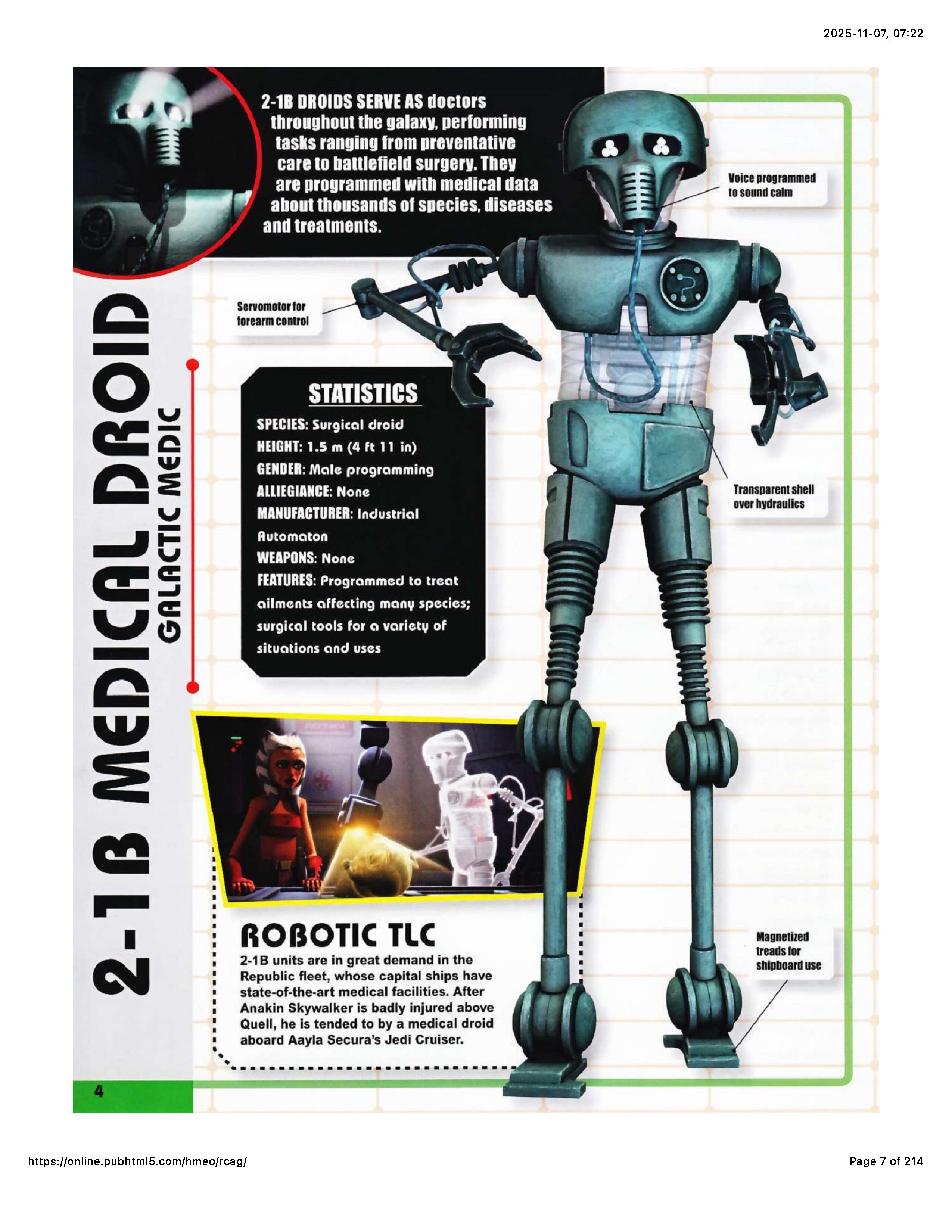
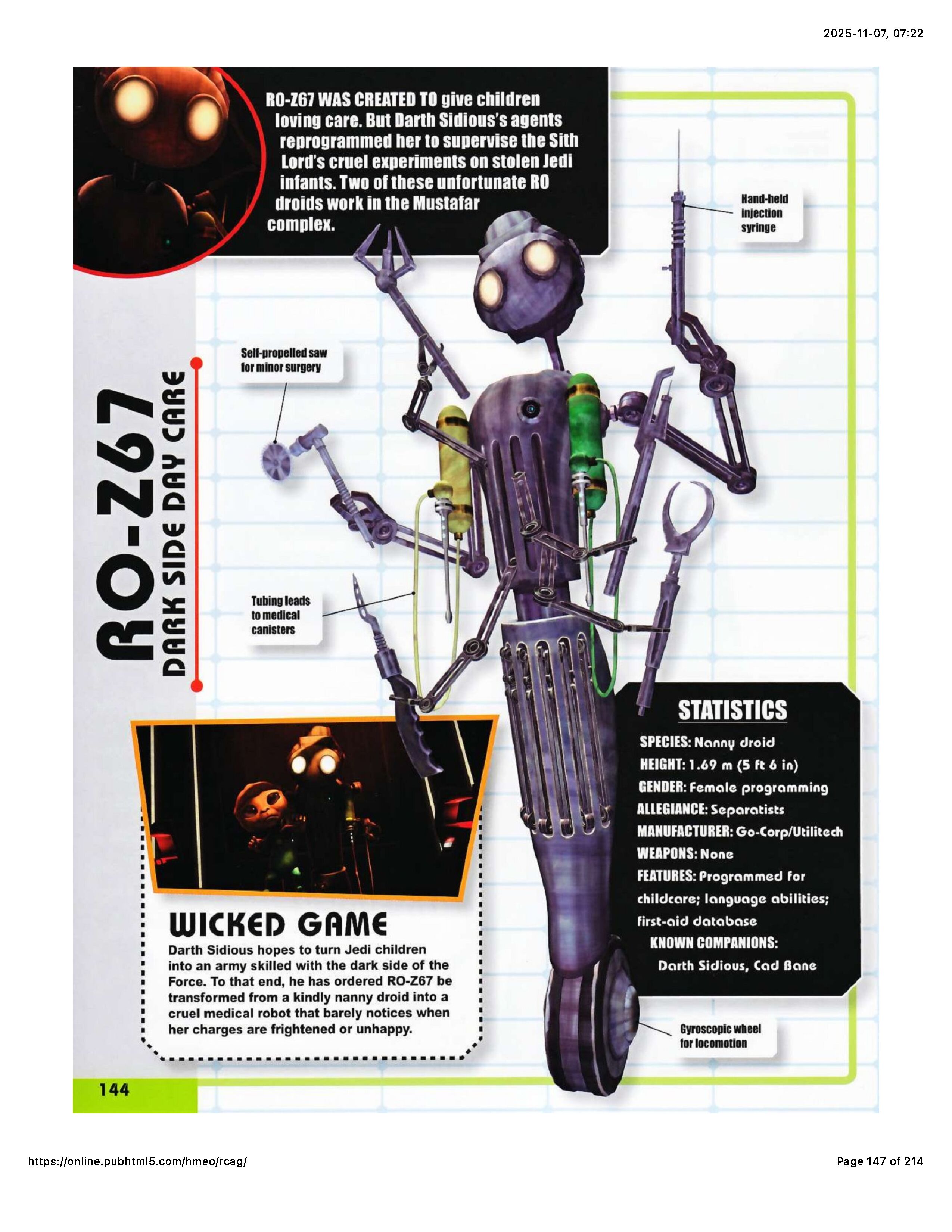
Or maybe you're casting a surgical droid and a nanny droid:
There is no magic formula for this. You have to exercise your creativity, and
creativity is difficult.
Consider [Portal's villainess, GlaDOS](https://theportalwiki.com/wiki/GLaDOS):
> During Anime Midwest 2011, voice actress Ellen McLain revealed that the
> premise of GLaDOS had always been a robotic voice that would guide the
> protagonist and often intimidates them. Early on development, Valve had used
> copyrighted voice samples as a placeholder for GLaDOS. As Ellen McLain
> previously voiced the radio communications dispatcher of the Combine Overwatch
> throughout the Half-Life 2 saga, the developers had chosen her for the role of
> GLaDOS.
It [goes a bit deeper than that](https://en.wikipedia.org/wiki/GLaDOS#Portal),
but Portal's original plot seemingly needed a voice-over — not necessarily a
_woman_ voice-over. They used this opportunity to create
[beautiful homages](https://en.wikipedia.org/wiki/GLaDOS#:~:text=The%20Birth%20of%20Venus)
and beloved in-world mythology.
Creators will always face criticism for semi-arbitrary decisions. Some celebrate
GLaDOS as a feminist icon while others see her as a harmful perpetuation of the
"obsessive/jealous ex-girlfriend" trope. Yes, this is a segue.
## Bias {bias}
After solving adaptation challenges, what’s left is bias: our reflex to
anthropomorphize machines along human gender lines.
This is not an essay about gender. This is an essay about lazy writing and bad
design.
"Male" and "female" are not physical truths like magnetism or whatever. Gender
is a natural trait of Earth life — not its computers. If you craft a story where
robots act like human men and women, please signal some intent to the reader.
Arthur C. Clarke and Stanley Kubrick were talented writers \[citation not
needed\], but _2001: A Space Odyssey_ fails the Sam Test.
[HAL-9000](https://en.wikipedia.org/wiki/HAL_9000) was cast as a male in the
movie: male voice, male pronouns. This is fine. I personally assumed that HAL
was genderless and the film's portrayal was an artifact of casting a male voice
actor.
But no — the omniscient narrator in Clarke's novelization clearly uses male
pronouns:
- "Poole and Bowman could talk to Hal as if he were a human being and he would
reply in the perfect idiomatic English he had learned..."
- "The time might even come when Hal would take command of the ship. In an
emergency, if no one answered his signals, he would attempt to wake the
sleeping members of the crew..."
- "Hal had been trained for this mission as thoroughly as his human
colleagues..."
- "For relaxation he could always engage Hal in a large number of
semi-mathematical games... If Hal went all out, he could win any one of them;
but that would be bad for morale. So he had been programmed..."
- "Hal had executed the order, but he had not acknowledged it..."
- "For like his makers, Hal had been created innocent..."
- "He had begun to make mistakes..."
- "To Hal, this was the equivalent of Death. For he had never slept..."
For writers as precise as Clarke and Kubrik, HAL seems to use traditional gender
stereotypes as a crutch: _men_ can be cold, calculating, and violent. HAL wasn’t
"male" — he was just written for a man's world. To me, it dilutes that wonderful
"human vs. machine" tension with mere "human vs. human" energy. In the novel, I
wish the crew referred to HAL as "he" while the narrator called HAL "it" — man,
I love dramatic irony.
---
## The Real World
This is happening. People are building these things.
One of the first ever
[speech synthesizers](https://en.wikipedia.org/wiki/Speech_synthesis) was
developed at Bell Labs in 1961. Do you know who was
[personally invited to witness that technology](https://www.historyofinformation.com/detail.php?entryid=4445)
and was so inspired by the experience that he wrote _2001: A Space Odyssey_?
That's right — Arthur C. Clarke.
In the 1980s, we got the infamous male
[Speak & Spell](https://en.wikipedia.org/wiki/Speak_%26_Spell_(toy)) voice and
early
[text-to-speech](https://en.wikipedia.org/wiki/Speech_synthesis#Text-to-speech_systems)
systems (default male voices).
Fast forward to ~2014. Siri, Alexa, Google Assistant ("GoogAss"), Cortana are
programmed to emulate female voices.
[^note]: Alexa's predecessor "Ivona" was
[literally inspired by _2001: A Space Odyssey_](https://www.sztucznainteligencja.org.pl/en/ivona-alexa-vika-or-intelligent-girls-from-gdansk/).
You can't make this up.
Now it's ~2025. Sam Altman tried to
[literally steal Scarlett Johansson's voice](https://www.politico.com/newsletters/digital-future-daily/2024/05/22/altman-scarjo-chatbot-00159490).
Elon Musk is selling
[his antisemitic AI girlfriend](https://futurism.com/artificial-intelligence/elon-musk-obsessed-xai-ani)
(with
[lingerie mode](https://www.huffpost.com/entry/musk-grok-ai-anime-companion_n_68768a3ae4b0eb54312b8369)).
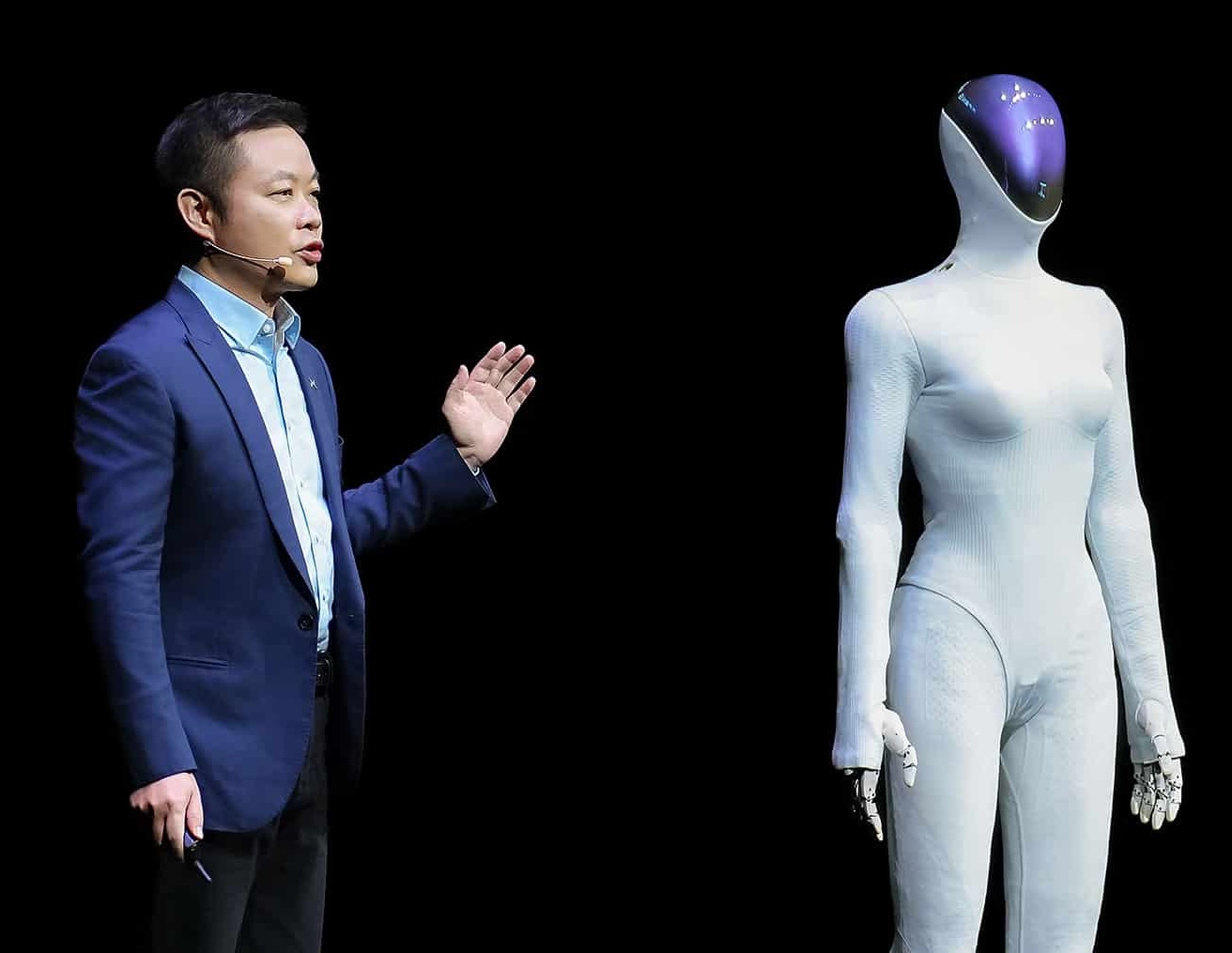
It's still 2025. The folks at XPENG
[bolted tits on a robot](https://mashable.com/article/xpeng-iron-robot-walking-viral-video)
and
[cut open its leg in front of a live audience](https://x.com/TheHumanoidHub/status/1986482482460725755).
Whatever this is, it's happening fast.